Pause before choosing another destination
Step outside and look across the water. Before checking your phone, name one visual memory from the museum: a bright edge, a face, a line of trees. Notice whether the real light around you makes that memory feel different.
You do not need to turn the next part of the day into another attraction. A sheltered pause can be more useful than an extra item on an itinerary.
Walk towards the Opera House if conditions suit
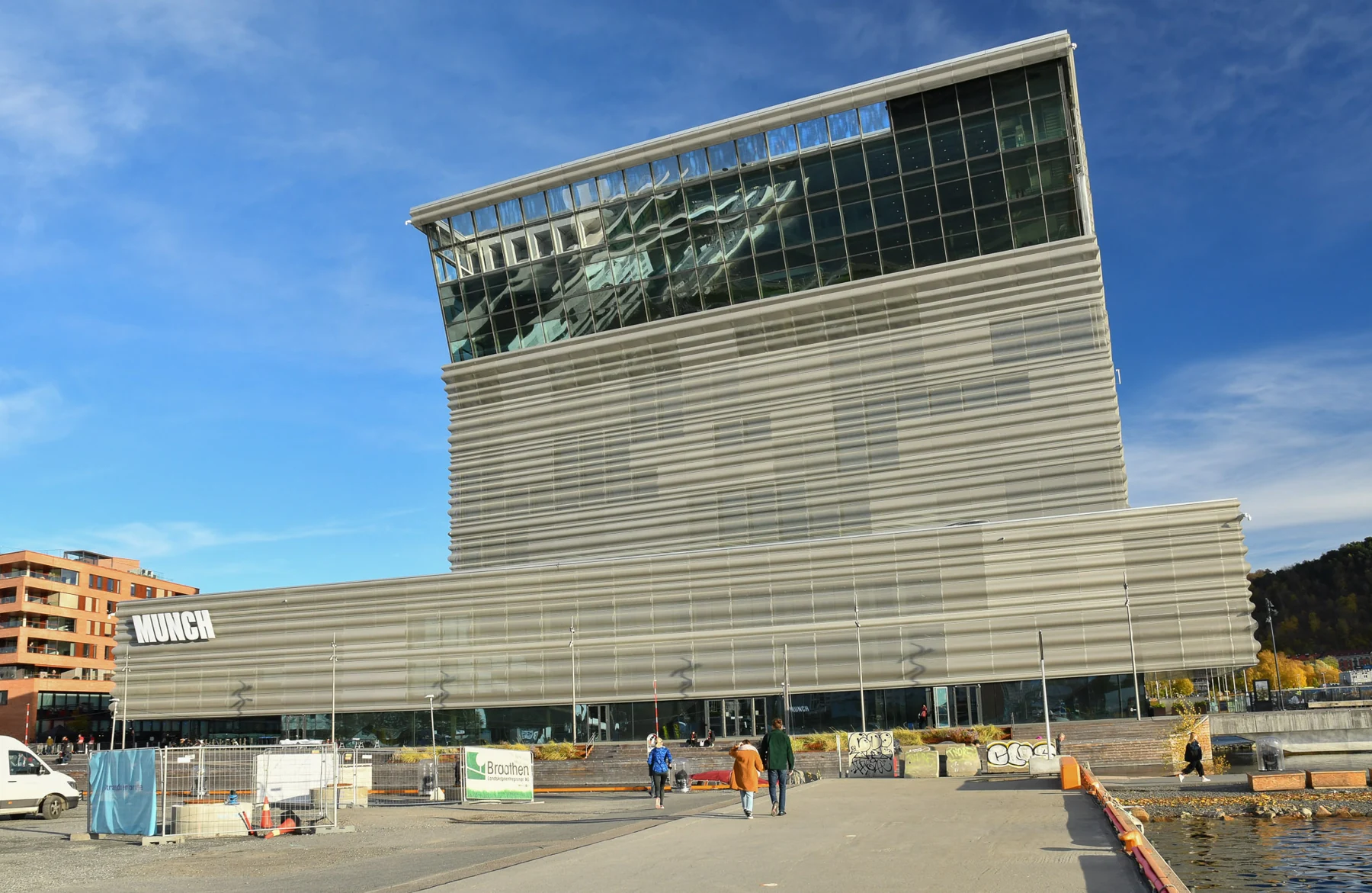
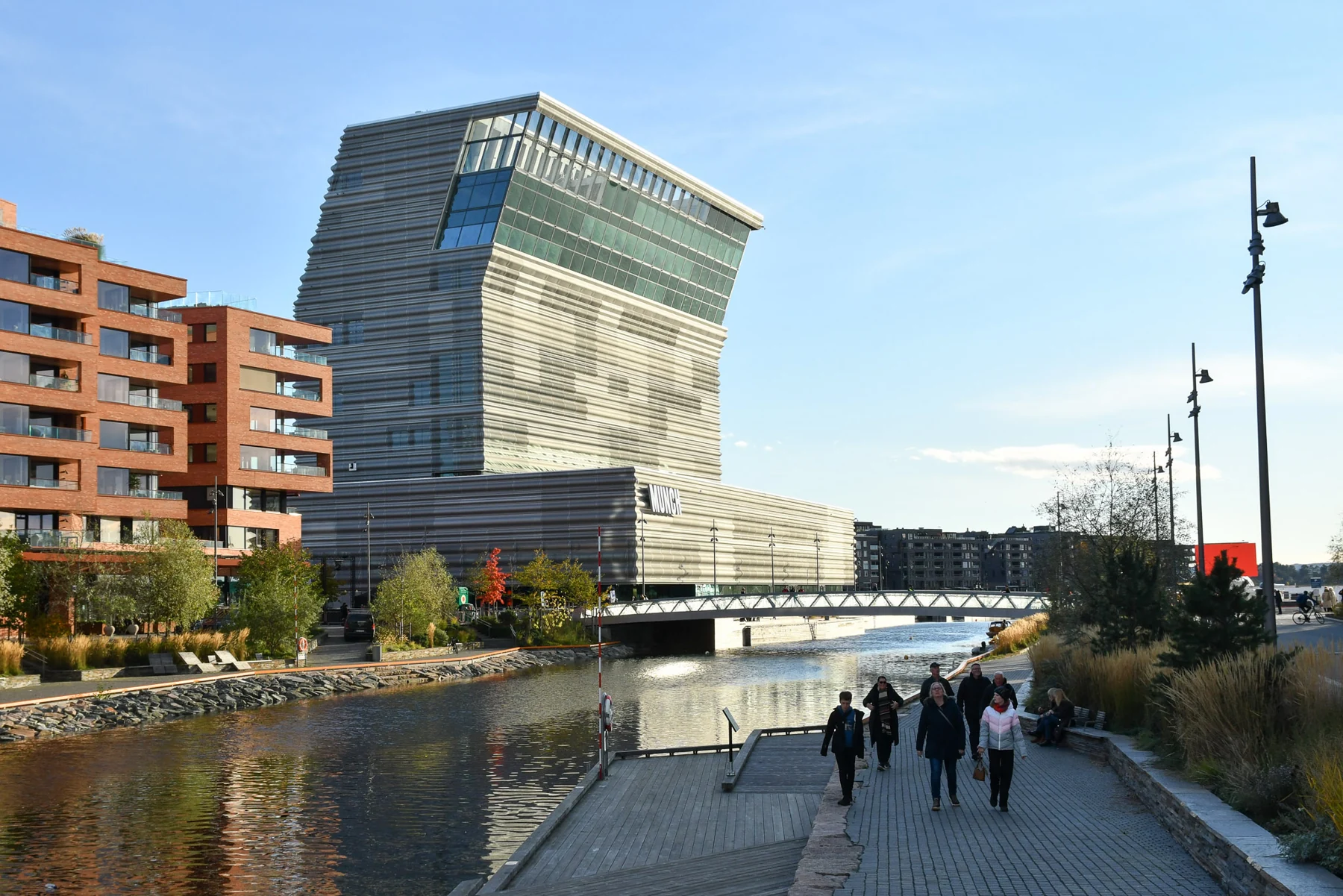
From MUNCH, the waterfront and Oda’s bridge give you a way to orient yourself in Bjørvika. The Opera House is a nearby landmark. Use local signs or your preferred map for the route; this page is a walking idea, not live navigation.
Do not assume every surface is equally accessible or safe in all weather. Wet, snowy or icy conditions change what is sensible. A roof or sloping public surface is optional; a ground-level walk is a complete experience in its own right.
Look for a contrast from the galleries
In Munch’s pictures, a landscape can carry a feeling. Outside, compare water with glass, reflections with straight building edges, and distant space with the crowded foreground.
This is an observation exercise, not a claim that the current museum waterfront is the exact setting of The Scream. Bjørvika today and a landscape in an artwork are different things.
Keep the rest of the day flexible
If you want another museum, check its current hours and location separately. MUNCH and the National Museum are not interchangeable, and seeing both in one day can be tiring. Choose according to your interest, rather than trying to collect every version of a famous work.
If you are returning to Oslo Central Station, check the route and allow time for the onward journey. A pleasant museum day is easier to remember when the ending is unhurried.